
Aug 13, 8:01 PM
The Cosmos on a Schedule: Africa Pauses for a Partial Eclipse
In the Tunisian city of Tabarka, observers halted their daily routines to witness the moon obscure precisely 59.06 percent of the sun.
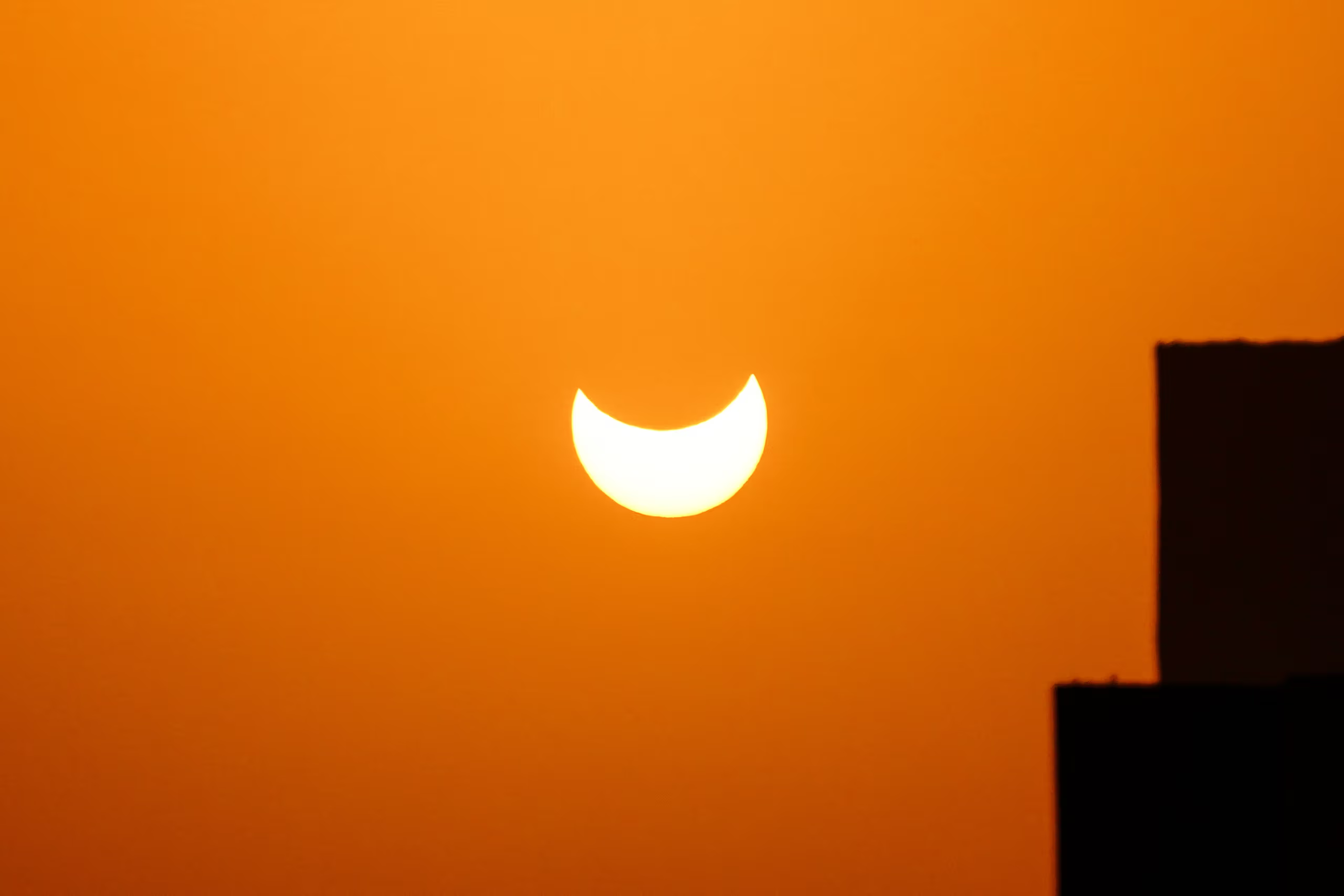
There is a peculiar comfort in the cold, unyielding mechanics of the cosmos. While terrestrial affairs remain mired in their usual, unpredictable chaos, the celestial clockwork grinds on with absolute, mathematical certainty. This Wednesday, part of the globe paused its daily routine to cast its gaze upward as a partial solar eclipse swept across the African continent. It was a momentary diversion, a brief interlude where millions found themselves united by the simple, albeit unproductive, act of staring at a partially obscured star.
The phenomenon was not a total blackout, but rather a subtle dimming of the daylight that required specialized equipment to truly appreciate. Across various regions of Africa, observers witnessed the moon taking a temporary bite out of the sun. The most pronounced effects of this astronomical alignment were recorded in North Africa. Specifically, the coastal city of Tabarka in Tunisia emerged as the prime viewing location for this particular celestial event.
In Tabarka, the lunar shadow managed to cover precisely 59.06 percent of the solar disc. This highly specific figure highlights the exactitude of modern astronomy, transforming a once-mythological terror into a predictable statistical data point. For the residents of this Tunisian city, the sun was more than half-swallowed by the moon, offering a stark visual demonstration of our planet's place within the broader solar system. The fact that astronomers can calculate such an event down to the hundredth of a percent strips away the ancient mysticism, leaving behind a profound appreciation for strict orbital mechanics.
Of course, a partial eclipse lacks the primal, twilight-inducing drama of a total solar eclipse. The remaining forty-odd percent of the sun is more than sufficient to maintain the illusion of a normal afternoon for anyone not actively looking skyward. Yet, the knowledge that the sun is partially blocked is enough to compel countless individuals to halt their economic output and look up. It is a curious human trait to be so captivated by a phenomenon that essentially amounts to a temporary reduction in solar radiation.
Ultimately, the event across Africa and Tunisia acted as a fleeting distraction from earthly concerns. Once the moon continued its orbit and the 59.06 percent obscuration in Tabarka receded, the sun returned to its full, blinding glory. The crowds dispersed, the protective eyewear was tucked away, and the continent returned to the mundane realities of the day. The cosmos had provided its scheduled entertainment, leaving the audience to wait for the next predictable alignment of the spheres.
Written by Thorben Thiede thorben.thiede@alpineweekly.com


