Jul 27, 6:01 PM
The Uzbek Princess and the Price of Swiss Naivety
A Geneva private bank receives a modest fine while the main suspect remains locked away in an Uzbek prison, highlighting the polite efficiency of alpine justice.
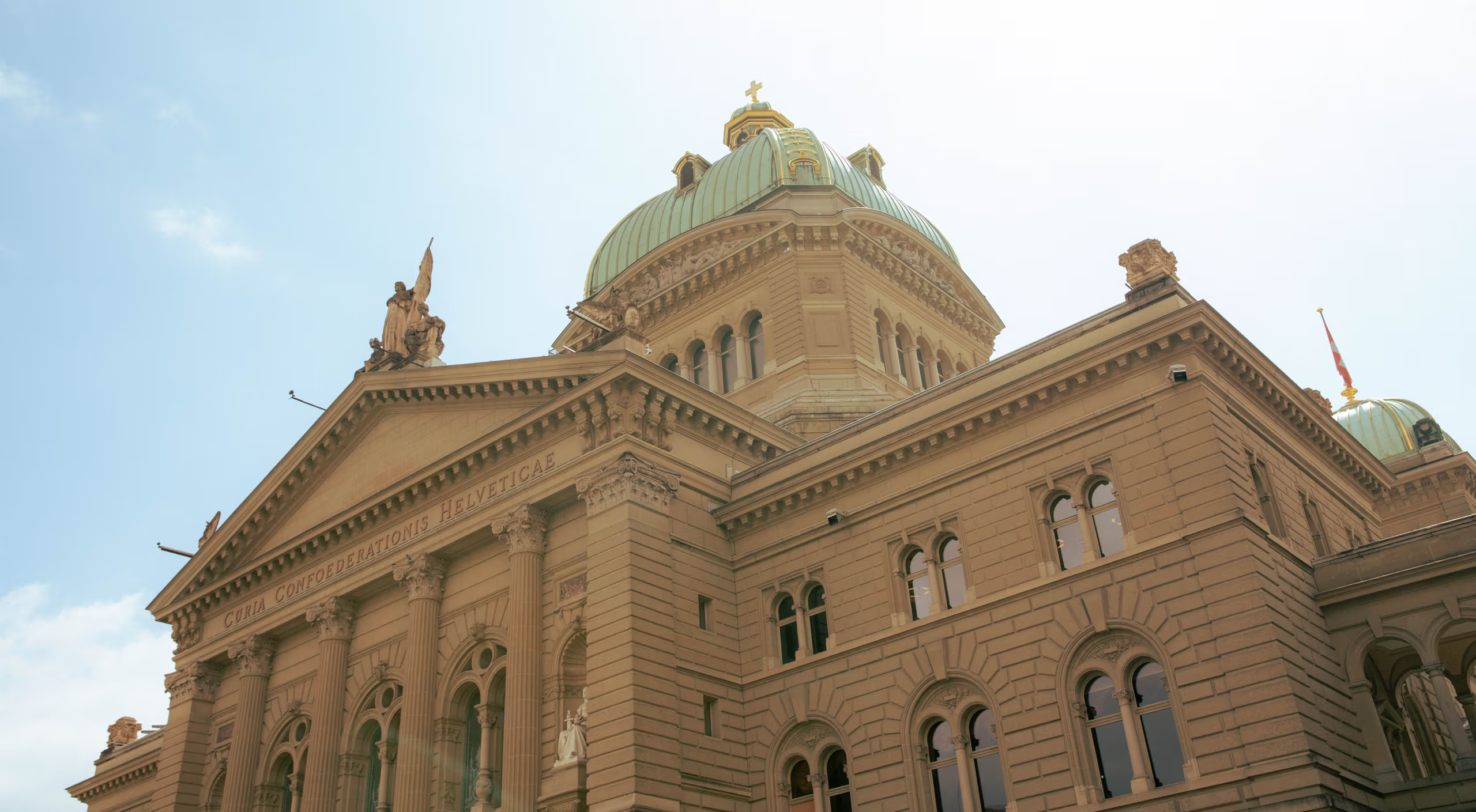
The story of an autocrat's daughter and a Geneva private bank is a familiar script in the wealthy, comfortably naive alpine republic. For years, the funds of the so-called Uzbek princess, Gulnara Karimova, rested quietly in Swiss vaults. Now, the Federal Criminal Court in Bellinzona has delivered a rather tidy conclusion to a sprawling money laundering saga. The verdict offers a textbook example of Switzerland's modest, polite form of financial scandal management, resulting in a three million Swiss franc fine for the prestigious institution Lombard Odier.
The court determined that the Geneva-based bank failed to implement adequate safeguards to prevent an employee from laundering money. The banker in question was convicted for neglecting to scrutinise the origin of the highly questionable funds. Lombard Odier firmly rejects the court's assessment. The bank stated that it maintained sufficient control mechanisms at the time and initiated the case itself by reporting the matter to the authorities. Unsurprisingly, the institution has announced its intention to appeal the verdict.
At the heart of the illicit wealth was Karimova's exploitation of her status as the daughter of the late Uzbek President Islam Karimov. Throughout the 2000s, she extracted massive bribes from international telecommunications companies eager to access the lucrative Uzbek mobile market. These funds were subsequently funneled through an elaborate network of shell companies and foundations before landing in the supposedly secure haven of Switzerland. The state apparatus, always efficient, has now confiscated assets and real estate tied to the scheme worth approximately 400 million Swiss francs. Naturally, the rather steep court costs of over 2.3 million Swiss francs will be conveniently deducted directly from these seized assets.
Curiously absent from the proceedings was the central figure herself. The court dropped the case against Karimova, as well as her closest confidant. While her legal representation claimed she wished to travel to Bellinzona to face the charges, Uzbek authorities refused her permission to leave the country. Because she has been languishing in an Uzbek prison for several years, the Swiss judges concluded that conducting a trial in absentia would violate fundamental rule-of-law principles. It is a highly principled, if somewhat convenient, legal exit for the Swiss justice system.
Karimova’s trajectory from a glamorous presidential successor to a disgraced inmate began its steep descent around 2013, as international corruption allegations mounted. Following her father's death, the domestic power apparatus turned against her entirely, sealing her fate behind bars. Meanwhile, the Swiss financial sector absorbs a relatively modest penalty, reflecting the country's enduring ability to process global corruption with bureaucratic detachment and minimal disruption to its thriving economy.
Written by Thomas Nussbaumer thomas.nussbaumer@alpineweekly.com