
Sep 17, 4:02 PM
Paper Tigers in Brussels Demand Miracles from Beijing
With the trade deficit mounting by a billion euros a day, the European Commission believes a new dialogue platform will intimidate China into submission.
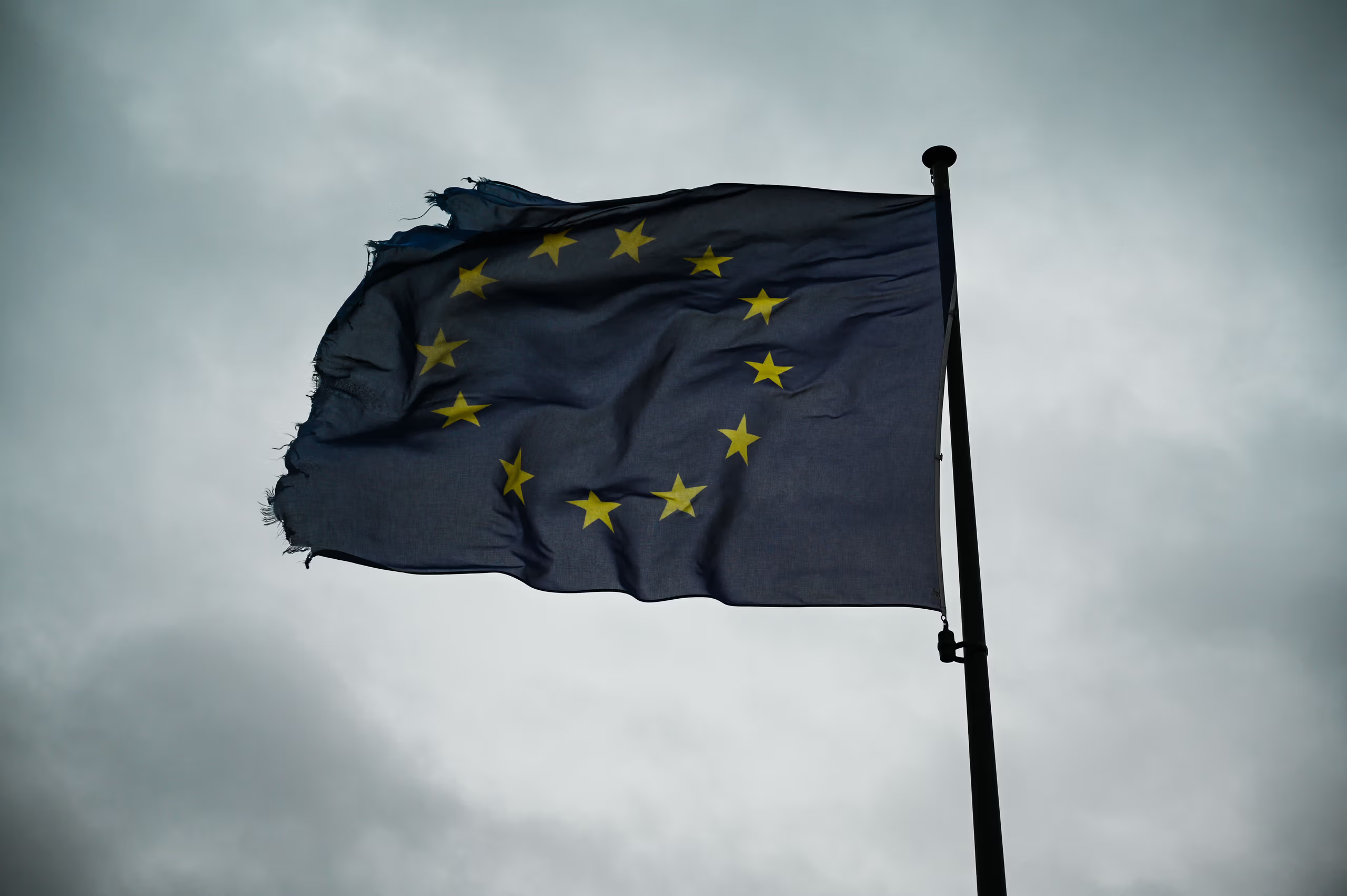
A one-hour video call is apparently all it takes for Brussels to believe it can alter the trajectory of global commerce. European Trade Commissioner Maroš Šefčovič recently concluded a virtual exchange with his Chinese counterpart, Wang Wentao, convinced that he had set the stage for upcoming negotiations in Beijing. The official posture from the European executive is stern: Beijing must deliver tangible results on market access, or face the consequences.
The arithmetic behind this sudden burst of European assertiveness is certainly grim. The bloc's trade deficit with China grows by one billion euros every single day. While European negotiators preach the gospel of rebalancing, Beijing remains singularly intent on preserving unfettered access to 450 million European consumers while fiercely protecting its own market. To resolve this structural asymmetry, Brussels deployed its favorite remedy: establishing a brand-new administrative framework. The EU-China Trade and Investment Council, launched in June, was tasked with converting endless diplomatic chatter into hard economic deliverables by October.
Whether Beijing feels remotely pressured by European deadlines is another question. European manufacturers remain acutely reliant on Chinese supply chains, particularly regarding critical minerals. Beijing maintains a near-monopoly over the refining of strategic rare earths, which happen to be indispensable for Europe’s automotive, green technology, and defense industries. Just a year after China choked off these exports amid a trade dispute with Washington, European diplomats are reduced to asking for export licences and supply guarantees, attempting to play tough while begging for raw materials.
Commission President Ursula von der Leyen tried to strike a resolute tone in her State of the Union address, asserting that Words are good. But deeds are better. She made clear that Brussels is ready to deploy its arsenal of trade defense instruments, ranging from anti-dumping duties to countervailing tariffs against state subsidies. The Commission is even drafting a strategic diversification mechanism to somehow legislate away its reliance on Chinese minerals.
Predictably, this escalating paper war has achieved little beyond escalating friction. European proposals introducing local preference rules for domestic products have drawn direct threats of retaliation from Beijing. Meanwhile, Chinese authorities recently instructed domestic companies to cease cooperating with Commission antitrust probes, including an investigation launched into e-commerce firm JD.com. As technical delegations prepare for Beijing ahead of Šefčovič’s visit in October, the Commission insists that failing to produce deliverables will leave Brussels no choice but to pursue coercive instruments.
The administrative class in Brussels continues to operate under the illusion that structural economic subordination can be managed through regulatory threats and procedural deadlines. China understands power and leverage; the Commission offers committees and policy papers.
Written by Martina Kirchner martina.kirchner@alpineweekly.com


