Aug 22, 4:02 PM
A Charred Compromise: Fontainebleau Reopens Amid Smouldering Risks
Authorities are betting on civic compliance as tourists return to the fire-ravaged Parisian hinterland.
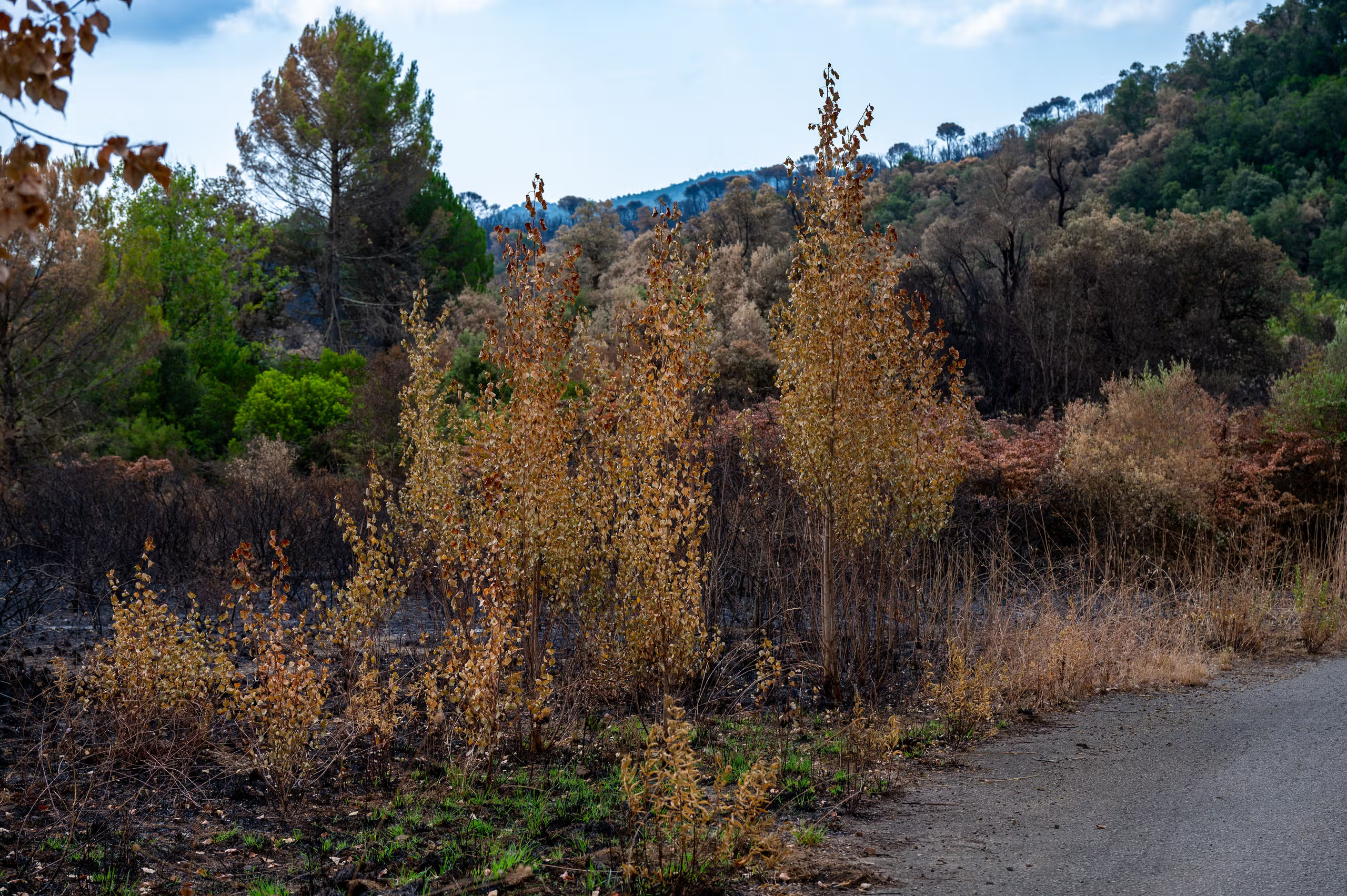
The former royal hunting grounds of Fontainebleau have partially opened their gates once more. After a July inferno reduced 2,000 hectares of the Parisian hinterland to ash, authorities have decided that 80 percent of the beloved nature reserve is now safe enough for weekend excursionists. It is a welcome development for the climbers and hikers who treat the woods as a second home, though the charred remnants of the landscape offer a stark visual of recent environmental failures.
Located some 60 kilometres southeast of the capital, the sprawling woodland serves as a vital artery for the local tourism economy. Climbers from across Europe, including dedicated Italian tourists who travel internationally just to scale the forest's famous boulders, are already flocking back. For a French nation currently grappling with alarming state finances and a chronically weak economy, the return of foreign and domestic wallets to regional businesses provides a necessary, if localized, economic relief. The immediate influx of visitors eager to resume their weekend routines illustrates exactly how dependent the surrounding communities are on this natural asset.
Yet the physical scars of the blaze remain highly visible, and the danger is far from extinguished. Ten percent of the former royal hunting ground was completely scorched, leaving behind a precarious landscape of fragile, blackened timber. In response, the administration has kept 20 percent of the forest entirely off limits, cordoning off a roughly 4,000-hectare restricted zone that encompasses both the directly affected areas and a sprawling buffer. Within this perimeter, the reality of the disaster is still smouldering. Seine-et-Marne deputy prefect Benoit Kaplan confirmed the ongoing struggle to secure the environment, stating that firefighters are out every day extinguishing hotspots.
The official strategy for keeping the public safe from falling trees and hidden embers relies heavily on laminated signs declaring access prohibited, alongside a rather desperate appeal to civic duty. Local forest workers have already expressed well-founded skepticism about this bureaucratic optimism. There is a palpable expectation on the ground that reopening the trails will inevitably invite rogue campfires, unauthorized barbecues, and the careless disposal of cigarettes. The temptation for hikers to wander into the charred zones for a morbid photograph is high, and the state’s actual capacity to police such a vast, porous perimeter is practically nonexistent.
France endured three consecutive heatwaves this past summer, leaving the regional vegetation severely parched and highly combustible. Kaplan has explicitly urged visitors to stick to designated paths while banning smoking and open flames entirely. However, enforcing such edicts in a sprawling, densely wooded expanse is another matter entirely. The reopening of Fontainebleau feels less like a triumph of environmental recovery and more like a calculated administrative gamble. The state is essentially betting that the public will suddenly develop a strict adherence to safety guidelines—a highly optimistic wager for a country where basic civic compliance frequently falls victim to casual indifference and a lack of enforcement.
Written by Sandy van Dongen sandy.vandongen@alpineweekly.com